Monday, October 10, 2005

Political Test


I guess cookiesap is a bit to the left ;-)

Courtesy of http://www.okcupid.com/politics

Thanks

Pakistan Quake: Learn and Do More


Ahistoricality has shared with us a great link to a site that both sheds light on the recent disaster as well as donation suggestions.

In the words of ahistoricality:
"Sepoy has been in contact with family in the region and is a generally smart guy."

Have a look:

http://www.chapatimystery.com/

Best of luck to all those that are leading the quest of helping the millions affected by this tragic event. Thanks also to Ahistoricality for being a loyal participant on this blog.

Saturday, October 08, 2005

Major Earthquake in Northern Pakistan


Hundred are feared killed in a huge quake just 80 km north of the capital Islamabad. The quake measured a full 7.8 on the renowned Richter scale.

How many earthquakes have to shake the poorer parts of the world, before we all open our eyes to the disparity in wealth across our planet?

Were you there - what do you know at this point?
Please share your comments, information, or first-hand narrative!

Thursday, October 06, 2005

Princess Nori is getting married


Isn't it nice! After all the bad news in East Asia with the Bali bombings, anti-Japan protest, and GW Bush opening his mouth, we can now announce Princess Nori's marriage to a Mr. Kuroda—--a commoner. Unlike Danish, English, and Spanish royal families, Nori has to leave the royal family, according to the BBC.

Japan has reformed in many ways, and much credence goes to Mr. Koizumi. Socially, however, Japan remains a very traditional society with many customs dating back hundreds of years. You can argue that the monarchic family of a given country (if applicable) demonstrates the cultural and social traditions of that location. In Spain, for example, society has modernized tremendously and new (and sometimes radical thought) is thus seen in the wedding between their Prince Felipe and commoner Letizia Rocasolano. She is previously divorced and an out-going career woman. You would not see that in Japan. If Japan's society has to modernize and carry with it an acceptance of progressive thought, it may have to look at the royal family and have Emperor Akihito promote a more avant-garde society.

Unless..............................................

Saturday, October 01, 2005

Another Sad Day for Bali

(wikipedia)

Despair and feelings of failure must be what is characterizing the thought process of the Indonesian authorities after this Saturday's devastating round of terror on the island of Bali. Perhaps it could have been avoided despite SBY's warning one month ago. Criticism, cynicism, and second-guessing is for another day -- today we mourn and do our best to share the love and compassion that is our best tool for peace and self-preservation.

The three restaurants involved were all famous for their expatriate patronage and all full at the time of the bombings. It is nearly 3 years to the day that bombings killed 202 people on the very same island. Vacations are all about having fun, relaxing, or getting away from it all. Like with the Sharm al-Sheik bombings, however, this couldn't be farther from the truth for the many killed in these horrific acts against humanity. Quite Naturally, Al-Qaeda affiliated Jemaah Islamiyah is a suspect.

May whatever higher being you believe in bless the (at least) 32 individuals who lost their lives in this round of terrorism.

Although does not exactly have the readership level of instapundit or Peking Duck, it would be interesting if you could share your view about this incident, and perhaps tell us more about the location of the blasts, and best, if you were there at the time and can give us a first-hand account of what you saw.
Xie xie!!

Thursday, September 29, 2005

Avoid Mice Fever (EHF)


In the northeastern Jilin Province the discomforting Mice Fever has been spreading rapidly. The Star Online reports that the number of fatalities may already have surpassed last year's number of 1,840 cases. Experts suggest, according to Sina.com that the increase may be linked to lower vaccination rates this year. Sadly, farmers in the poorest areas often cannot afford the vaccination, which is fatal in the areas where the Fever has hit the hardest. In one of the more seriously hit areas, Jilin's Shuangyang district, national-level monitoring of the disease has been implemented. The bottom line: stay away from Mice, their droppings, or any culinary delicacy (no matter what they tell you in Jilin) that involves Mickey's relatives.

Now, would this disease ever have the potential to reach epidemic status (like SARS)? You probably won't get that news from any Da Lu (Mainland) news sources if this ever were to become the case.

Links:
http://english.sina.com/china/1/2005/0927/47554.html
http://thestar.com.my/news/story.asp?file=/2005/9/28/asia/12162487&sec=asia

Tuesday, September 27, 2005

End of China/Taiwan's "Dollar Diplomacy"...maybe

$$vs$$

Remember the China/Taiwan "dollar Diplomacy" and these were donating vast amounts in order to win support in favor of each respective" country." This may soon be over Chen Shui-bian has called for this to stop and in his own words "Taiwan must never engage in a spending competition with China." You really think he can and will stop this? But then again, its also very exotic to report on China/Taiwan's surge in foreign aid to countries such as Grenada, Nauru, and Dominica.

What does this mean for the Taiwan-China rivalry? Would it mean more spending on other factors of rivalty (such as the military) or could it reduce the tensions between the two Chinas? You never know - but the sabrerattling between the rivals has lasted for 50 years without any major conflicts- why wouldn't this carry on as usual despite the end of the expensive "dollar diplomacy". Besides, the Taiwanese New Dollar has just dropped to new lows.

Monday, September 26, 2005

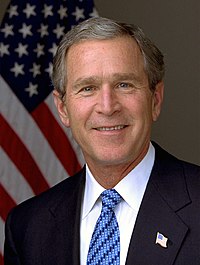
Bush Should Visit North Korea: Kim Jong-il

According to a Yonhap news report, Kim Jong-il is apparently seeking a visit by Bush or another high-level official to visit his beloved DPRK. Bush Sr. and Condi would also make the VIP list.


What a situation it could turn out to be - Kim and Bush shaking hands. The comedy channels would have enough material for years - you would almost think Jon Stewart and Jay Leno would buy one of Bush's oil wells for such an event.

And what about translators? Would they 'really' translate when Bush and Kim meet?
-------------------
Bush: I'm very happy to be here today! (Kim's translator): I envy your strength, Dear Leader.
Kim
: Welcome to heaven on earth. (Bush's translator): Isn't it almost as nice as Texas?

Bush
: Do you remember my comment about me loathing you? (Kim's translator): Let's be friends.

Kim
: Your Vice-President Cheney called me a 'bloodthirsty beast'. But I still think you're a half-baked man (Bush's translator): Mr. Kim loves Dick Cheney's blood sausages, and even more, your baked bread.

--------------------
Let's hope Messrs. Stewart and Leno do it a bit better, if Bush and Kim do end up meeting...

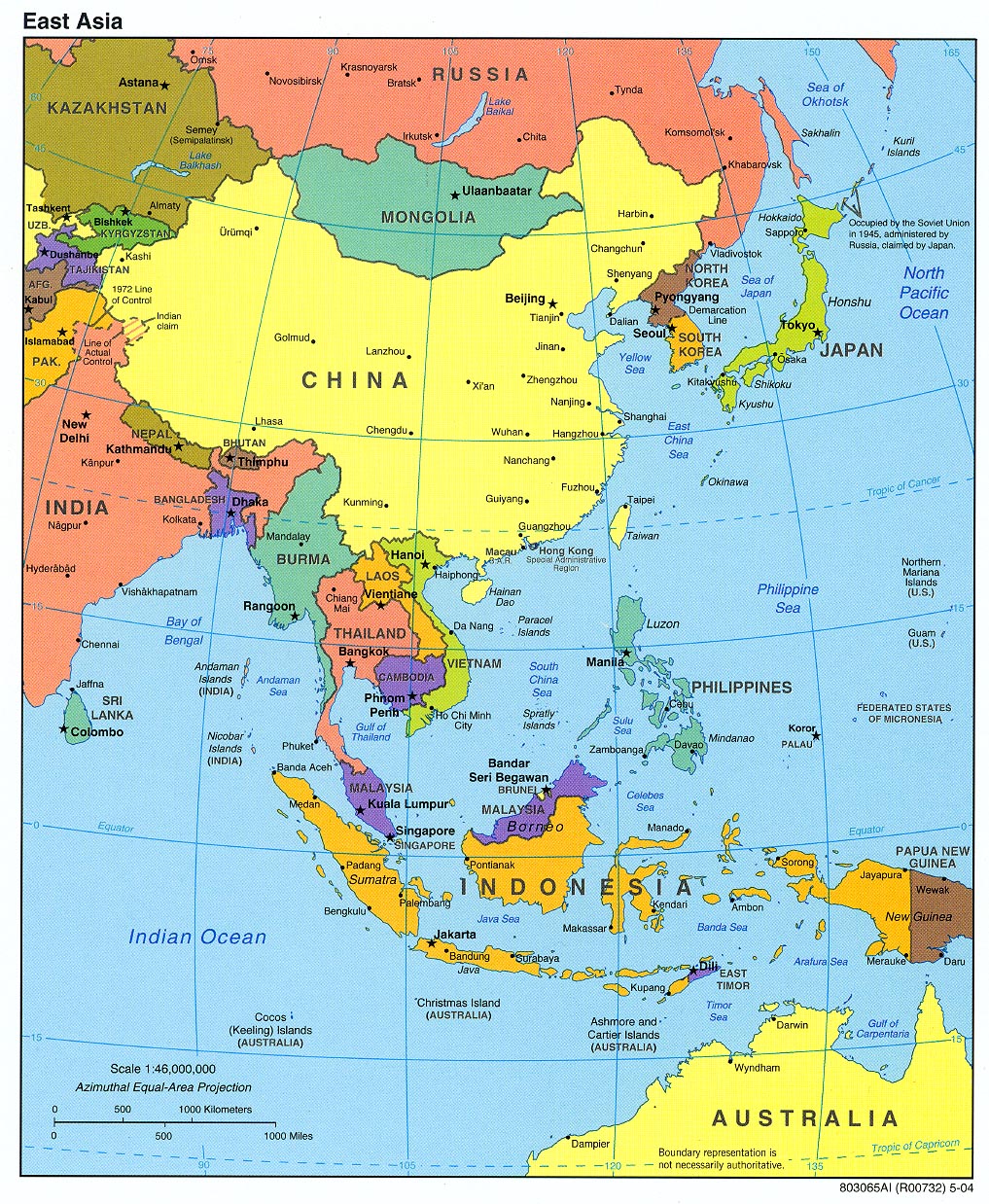
Want to learn more about East Asia?


Copyright-Univ. of Washington


The East Asia Center at the University of Washington has an impressive list of Links to useful sites related to any aspects of East Asia ranging from General Information to Cultura, History, Languages, and many others.


Let's hope they think as highly of this blog :D

Cheers

Friday, September 23, 2005

Higher Number of Mental Disorders in the South Korean Military; Korean Times


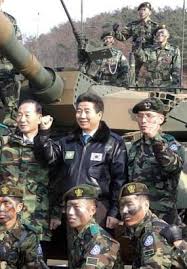
You may have heard rumors about the condition for soldiers in the South Korean military. Rumors speak of a hard-line marine corp, poor facilities--archaic to our time, and a tough conscription service that takes broad sweeps by forcing all young men to join the armed forces, save those that have physical- or mental health issues. While it may sound like a fair system--as you don't want unstable individuals in control of lethal weapons--you may be surprised.

The Korean Times reports of new information released by South Korea's Defense Ministry that speak of an increasing number of hospitalizations due to mental disease in Korea's armed forces. This does not sound swell now, does it?

Politicians and experts speak of a conscription service that signs up soldiers without serious consideration to their medical and mental history. Others speak of how the poor conditions in the military is not exactly "helpful" to preventing people developing mental conditions. It thus seems there's some credit to the Marine story and how it may be "driving people crazy."

It sounds like South Korea has another area in which it needs to shape up its human rights 'work-out'--a leftover from the 80-90s. It could also, however, demonstrate a global trend towards pacifism and the falling support for keeping such large military establishments active. The prosperity in the North East Asian region has developed without any major military conflicts since the Korean War, and perhaps people are starting to see the direct relationship between peace and prosperity.

Or maybe not. People may have developed mental disorders in the armed forces since the invension of the bow, arrow, and other sharp objects. What do I know??? I am not an MD in Psychiatry. What is important, however, is what you think?

Tuesday, September 20, 2005

Alas: North Korea wants a civilian nuclear program earlier than expected...


Sigh.... And we all thought it was going to go so smoooooothly....

BBC News Article

Is this is? Are we back to Square 1?

Monday, September 19, 2005

The Joint Statement: A scorecard


After much media ado and happiness regarding the first 6-party accomplishment (knock on wood), here is my numeric take on the joint statement issued on Monday on North Korea's nuclear program

Section 1
So they all agree on removing nuclear weapons from the Peninsula. North Korea has signed it. Good for all of us. +1
The US has agreed it won't attack the DRPT. Super. +1
The return to the 1992 joint declaration. DejaVu!. +1
South Korea will not build, receive nor store any nukes. Hmmmm. Ok. That's also great. +1
North Korea's right to a peaceful nuclear program. I'm pro-windmill, and not so happy about nuclear energy. That's a -1.
Light-water reactor issue. That might come back and haunt us all. Not great either. -1

Sub-total: +2. Not bad, Messrs. Kim, Hill, Wu, et al.

Section 2
The six parties have agreed to abide by the purposes and principles of the UN Charter and recognize the norms of International Relations. With US attacking Iraq, we are currently lacking international norms and ethics: +-0

DRPK-US mutual respect for each other's sovereignty, peaceful co-existence, and steps to be taken to normalize their relations. Engagement is key. +1

DRPK-Japan took steps to normalize their relations. Wonderful. Perhaps North Korea will be more honest about the abduction issue and help prevent an anti-North Korean backlash under future-PM Abe. +1

Although this is a very vague category, we're still up with +3. That's stupendous.


Section 3
The six parties have agreed to promote economic cooperation in energy, trade, and investment, both bi- and multilaterally. Yahoo. Have you heard of Friedman's Dell theory of conflict resolution? +1

The five other nations will provide the DPRK with energy assistance and South Korea will stand by its commitment of providing 2 million KW of electric power. Let's hope this happens without any corruption scandals. +1
Sub(way) total: +2

Section 4
Commitment to long-lasting peace in northeast Asia. Sweet-honey-rosy stuff, but looks great on your CV. +1
A separate forum to pursue this. Why don't they use ARF, or Asean+3, or the like? But perhaps this could be a forum that actually works! Wow. That would be great. +2
Sub: +3

Section 5
Step-by-step follow through of commitments. This should help prevent a "you go first" situation. Nice one. +1
Do we need a sub? +1

Section 6
Another 6-party meeting in November. Let's hope this gets even BETTER! +1
Sub: +1

Deductions (them yella' cards):
For all the stubbornness (on all sides): -3
For the many, many…… meetings it required (and money it cost the tax payers): -1
This could still drag on for month, and months, and months, and m........ -1.25

Total:
What's the total? The quantitative conclusion?
I don't know. Who cares? It's like the point system in "Whose line is it anyway"? We don't really care. Its about the road and the journey 'out there.'
Let's instead save the energy and spend it on making the beautiful Korean peninsula a peaceful place with only one flag!

NK Agrees to Seize Nuclear Programs

AP

WOW. Christopher Hill and Co. did it!!!

Now we just need to unify the countries...

Sunday, September 18, 2005

Hill's Monday Au Revoir- AP

AP

AP reports that Christopher Hill, the head US Envoy at the 6-party talks, will leave Beijing on Monday afternoon after 7 days of negotiations. Whether he will leave the talks with an empty briefcase or whether his sooner-than-expected departure it will pressure all parties to sign an agreement, is yet unknown.

Pressure seems to be mounting on the US to allow the North Korean regime to establish Light Water Reactors, as originally promised in the 1994 Agreed Framework. It will be exciting to see whether this issue is a 'showstopper' or an issue to be resolved before the new Monday deadline. These LWR could potentially be used to construct nuclear weapsons material, but it is very difficult and probably the best solution for a country starved of energy.

The US should let the North Korean regime keep a low degree of Nuclear Power technology, in order to gain some leeway with the communist regime. This could in the long-term allow for better engagement and communication between the North Korea and the other 6 party members -- the best way to start a reform process.

My other suggestion is to let Denmark and Holland build windmill farms in North Korea. That's would be a sight and a half.

Saturday, September 17, 2005

The 6-Party Talks Carry On...


Extending the deadline for the adoption of a Chinese draft document stating DPRK's right to utilize nuclear energy technology, the negotiations in this 2nd part of the 4th round is continuing.

Is there still hope - will the US find an alternative for the North's demand to establish a Light Water Reactor, or will the North give up on this?
Is there still hope?

Latest BBC News Article

Perhaps there's a chance for the US to commit as the eye of the US population is looking the other way, focusing on Hurricane Katrina, New Orleans, and college football.

What do you think?

Friday, September 16, 2005

The 6-Party Talks. Stalled Again???? Go Figure.

After having just reconvened after a long break in the 4th round of the super-duper 6-party talks, an impasse between North Korea and the US has left the talks stuck in the mud...once again. Similar to the situation before the long 'break', the North Koreans cannot agree with the US on the issue of having a peaceful nuclear energy program in the form of a Light Water Reactor (LWE) power plant.

The situation was predictable as most countries agreed with North Korea's request for a nuclear power program to fill its domestic needs rather than being dependant on its neighbors. But I think the problem goes deeper. North Korea is at heart still at war. The US and Japan are still seen as active enemies that North Korea fears will attack any time. For North Korea to suddenly accept to be dependent on its enemy (or their allies, such as South Korea) to supply them with crucial resources, is silly. There are many steps that need to be fulfilled first. So in other words this calls for a comprehensive plan, or a Grand Bargain (thank to Mr. O'Hanlon over at Brookings) to solve most of these problems at once, to prevent some problems standing in the way of each other.

A Grand Bargin should include not only the dismantling of the North's nuclear program, but also signing a comprehensive peace treaty, agreeing to de-militarizing the peninsula, re-establishing diplomatic relations, etc. etc. Before this happens, it seems very unlikely that the North will engage in an economic and inter-dependence role with its enemies, basically due to the threat it perceives in the other 6-party members, and the US' lack of a comprehensive strategy to finally come to terms and solve the North Korean dilemma.

Comments, please.

Thursday, September 15, 2005

Asian Culture and Holidays: Chusok


East Asia Blog should not only be a forum for political and economic issues. Soft issues, such as culture, art, and entertainment (I love Korean movies) are just as important and interesting.

Since the Korean Thanksgiving, Chusok (추석), is just around the corner, now is an appropriate time to discuss the meaning of this important holiday. The following website gives you a good explaination of the ways in which Koreans celebrate their harvest festival:

Chusok the Korean Thanksgiving, by Eun Mee Kim

Korean Thanksgiving Day: by Yoo Min

Chusok: by Bet Key Wong

In a nutshell, Korea turns into one big traffic jam during this holidays, as people visit family members and graves of their ancestors, which they worship.

My own experiences from Chusok is that you get time off from work, and that's always fun.

What are your experiences?
Please tell share your stories, both from a Korean and Expat perspective.

Friday, August 19, 2005

Common East Asian Currency?


Korea Times writes about the proposal of an East Asian Currency

This would include Japan, South Korea and China. Now, why in the world would they want to do that? Aren't there enough grieviences between these countries to fill an oil tanker? The relationship between these countries is enough in itself to make the efford effortless. But then again, there are some positive aspects about it as well. What if, in the wake of the 6-party talks, this could kick-off an even closer cooperation between the countries to lubricate the rusty tensions in Northeast Asia. Here are some of the pros and cons. I am far from a currency expert, so your comments are highly appreciated (I will correct anything that is flatout wrong):

PROS
1. Quoting Korea Times "...under the current U.S. dollar-dominated currency system, Asian countries will not be able to maintain regional financial stability and sustain high economic growth". A common currency would enable East Asia to better shied itself from various shocks.
2. Peace, peace, peace. Common currencies have often been a major part of arguments speaking for increased inter-dependence with peaceful purposes.
3. Prevent another East Asian Economic Crisis, which could hurt China in the future.

CONS
1. The East Asian economies depend too much on exports to the US and lack a suitable financial system to deal with the current account surplus, Choi Gong-pil a Korean economist was quoted in the Korea Times.
2. China and Japan would never be able to build a working relationship conducive to such developments.
3. The US hubs-and-spokes system in East Asia would not allow for an enhancement in a regional structure such as a common currency. It would also not fit into the security parameters of East Asia, particularly with the Taiwan issue.

Tuesday, August 09, 2005

DDDDOOONNNNGGG [sound of bell]: End of Round 4!


In retrospect, the 4th round of the six-party talks have produced absolutely nothing. Diplomatic kow-towing and tug-of-wars throughout the 13 days of negotiations has not managed to get the 747 Jumbo of an issue out of the mud and towards any tangible accomplishments or goals. Asia East Blog will take a look at a few of the main issues:

-A Nuclear-Free Korean Peninsula
North Korea has generally agreed to such an utopia, but has pushed for the establishment of a civilian nuclear energy facility, which has dominated the headlines. Please see below.

-Light Water Reactors (LWR)
North Korea was hell-bent on their right to maintain such reactors, which terminally became the stumbling block (or deal breaker) for this round of talks. Utilizing LWR for "peaceful" energy purposes in North Korea is not acceptable by Hill and his American delegation, who fear the North Koreans may use such facilities to generate weapons-grade plutonium (despite the much greater difficulty than at other types of nuclear plants). None of the 5 other parties are willing to issue a guarantee for the North Koreans to establish a LWR, as originally promised in the Agreed Framework and was to be constructed by the Korean Peninsula Energy Development Organization (KEDO). In a strong statement Hill said, "We decided it was time to end it and go to recess, with the idea that they can go back and think about what they've been told, which is, they're not going to get a light-water reactor."

-Peace Treaty
In what seems to make a whole lotta sense, the North Koreans have iterated their desire for a peace pact with the US. The two countries have officially been at war since the end of the Korean War in 1953, which ended with a cease-fire agreement. North Korean authorities stated, "Replacing the armistice agreement with a peace treaty is an urgent issue, which North Korea and the United States should immediately address to resolve the nuclear problem in a fair manner." This would seem to be a great first step--but we're still faraway.

-Future Talks (and actions, if any)
That's right. After a 3-week recess the 'big boys' including nice-guy Mr. Hill will experience another deja-vu in Beijing where expectations are as low as President Bush's approval rating. The Chinese delegate, Wu Dawai, is optimistic, however, which is understandable as China is poised to be the biggest gainer of the talks. Where why: if the issue is resolved: China is will appear as a good-will figure with gained diplomatic respect; if the talks fail: China will still have established an image as a worthy negotiating organizer through the 6-party talks being hosted in Beijing. The Washington Post argues that China has invested the most in the 4 meetings and has much to lose--that may be so, but in the long-run it will still be the US and North Korea that will be staring actors (or actresses) fated to disappoint, in this seemingly never-ending story.

-In summary
Christopher Hills is widely characterized as a flexible and skilled negotiator, as seen in his efforts in the 1998-99 Kosovo crisis. In the 6-party talks he was not given the amount of elbow space needed to successfully solve the nuclear issue. In a word, the US has not put enough serious bargaining power into this game. While keeping pretty much the same line drawn in the sand, the US is just as reluctant to give into any concessions. It may very well be that North Korea needs another Gorba before we can see any light at the end of the tunnel, but while that is not very likely, I do not think we can keep pressuring North Korea is this boxing fight between Mark Tyson and the mosquito equivalent DRPK (note, mosquitoes can carry all sorts of deadly diseases). At the end of the day, the United States IS the big boy in the playground, which has to make the choices that have an impact. You can say as much as you want about the atrocities of the North Korean politburo, but the only effort that will have a lasting effect (unless you're naïve enough to believe in the collapse of North Korea) is a 'Grand Bargain' between the US and North Korea. Please consult with Mr. Michael O'Hanlon over at Brookings for his ideas in this regard and how they seem the most credible, as opposed to the piece-meal path of the George W. Bush.

Friday, August 05, 2005

Asia Top 3


After a long absence on Holiday, Cookiesap is back with an update on some of the big issues in East Asia. I call it my top 3 list. Feel free to comment as you please:

3) Typhoon Matsa is about to hit Zhejiang and Shanghai. What can we do? RUN!

2) Russia: Another submarine is stuck to the ocean floor. Bottomline: Russia's military is rapidly deteriorating, and it is a horrible foreboding for the dangers of its much more dangerous nuclear stockpile.

1) North Korea: Impasse in the 6-party talks. On their 11th day of talks, the US negotiator Chris Hill is getting no-where. Why? Because the US is investing too little in this extremely urgent matter. Bush is simply over-stretched.

Monday, July 11, 2005

Rice calls for change in Burma (but driving with one hand)


During Secretary Rice's meeting with Thai PM Thaksin in Phuket, the Burma issue once again made it to the surface. The pressure on Thailand is founded in the fact that the South East Asian country has connections with Burma; the US does not.

As usual, Aung San Suu Kyi's name was used to speak for the democratic movement in the country. Is this, however, the right approach and is the US thoroughly interested in making Burma a "freer country"(ie. with 'good folks', not 'evil-doers')? There are few natural resources in the country, which the US cannot live without; the SPDC junta-led country is not a direct threat in the "war on terror"; and there's always the China connection.

The US is trying to put leverage on China as the Middle Kingdom poses a huge economic threat to many a western country. Compounded with the North Korean issue and other trade disputes between the US/EU and China; for the US to confront China in the Burma issue is probably more than the foreign policy hot-air balloon can carry. Instead, the Burma issue has becomes one of the ballast bags--long ago thrown overboard--perhaps with the exception of Bono's admiration for 'The Lady. Yes, the US cares about the human rights abuses in the country, but there's not really energy/resources in the current administration to do anything about it. Who can?

Rice is definitely not showing any more effort in solving the Burma issue, than someone driving a vehicle with one hand, while the radio is on and the other hand is sticking out the window sensing the wind to see which way it is blowing. You don't need a vane, Dr. Rice!!

Sunday, July 10, 2005

Let Engagement Prevail: North Korea Agrees to Return to 6-party Talks


Is this good news or what? North Korea has agreed to participate in a new round of 6-party talks. The meeting is due to take place on July 25.

Although the 6-party talks are insufficient to solve the nuclear issue on the Korean peninsula, it is a step in the right direction. One thing, however, that is certain. Is that engagement and positive approaches to North Korea will prevail. Major scholars such as Oberdorfer, O'Hanlon and Harrison all argue that sincere and resolute engagement with the Hermit Kingdom is a prerequisite to establishing a nuclear free Korean Peninsula---and perhaps towards full demilitarization.

Remember, it was engagement with the USSR that 'broke the camels' back during the cold war---by the most unlikely of all, Ronald Reagan. Would Bush be able to take a similar jump?

For more information on North Korea: http://nkzone.typepad.com/nkzone/2004/02/oberdorfer_.html
An interesting blog on North Korea.

Saturday, July 09, 2005

Philippines...what is going on?


What's going on in the Philippines?

For weeks, a growing anti-Arroyo movement has been gaining foothold, but the first lady has still kept her grip on the military, the government, the courts and the church...so far. On July 12, however, the Catholic church of the Philippines will convene to create an announcement that states whether they are in support or opposition of the president. This will either "make or break" Arroyo, as the church was crucial in the downfall of Estrada.

Meanwhile the protests carry on. Police has been breaking up more riots, but what will now happen? The Philippines, despite all its turmoil, has always found a way out, in my opinion.

Although previous leaders in the Philippines were 'kicked our' (Marcos and Estrada), things still need to get a lot worse, before we can expect anything radical to happen. That's how I assess the situation.
What is your take on it?
Any locals who would like to chip in?

Thursday, July 07, 2005

Our sympathies....


Our thoughts, feelings, and sympathies are with the casualties of today's bombings in London.

May they rest in peace.

Wednesday, July 06, 2005

The Anti-Japanese Protests - 2 months Later


It has now been approximately two months since the anti-Japanese protests took the world media world by (near) surprise and raised the eyebrows of many a Japanese citizen. What has happened in the interim?

First of all, there was the incident, where China's Vice-Premier bailed out on visiting Japan's PM Koizumi. Quite an embarrassment - but noteworthy in the "who bows for who" contest between the old rivals. Elsewhere, new events in China have mainly been surrounding various protests within the 'great firewall' between officials and regular Jane and Johns (or should I say Wangs and Lius). Perhaps the recent turmoil, as we particularly saw in Anhui Province last week, may call for another round of anti-Japanese protest to 'unify' once again. Isn't that what it is for? To have a common purpose that can bring poor and rich alike (and their chasm of a difference) connected and bridged together. China sure is having many balls in the air: authoritarianism, capitalism, nationalism, revisionism, and many others. What happens if one of these falls to the ground?

Do you think there will be more anti-Japan protests in the near future?

Thursday, June 30, 2005

Where are you from?


It's great to see so many cultures, nations and languages are represented and reading this blog. In that vain, let's share with everyone where we are from and what we think is the BEST THING about East Asia.

Thanks!


I'll start: I'm from Denmark and the best thing about East Asia is the region's economic and political development over the past 30 or so years. This has pulled millions of people out of poverty. Something other regions (especially Africa) could learn from.

Thursday, June 23, 2005

Popularity: China 1 - USA 0


Did you hear? According to an opinion poll in 16 different countries, China is more popular than the US!
Wow.

The Pew Research Center published the poll today, to the great revelation of most people.
Or is it surprising?

After the War in Iraq, it seems that the US is no more popular as Vanuatu. But does it matter?

Anti-Americanism has been an issue in East Asia for quite some time. Will it get worse? Hard to say, but perhaps we'll start to see the political repurcussions, as the children who grew up with anti-american sentiments are now at the wheel in various Asian governments.
Or is it just a media/general hype?

What is the role of the US in East Asia? - Lemme hear your say:::

Tuesday, June 21, 2005

Teaching in Asia


Often left without a clue on what path to take after graduating from collage, teaching in Asia is a widely popular adventure many a native English speaker embark upon. I can personally testify that although it may not teach one the work skills you would want to use in a corporate career, it definitely opens your eyes to a whole new culture (or in some cases, the horrors thereof) and gives you the memories of a lifetime.

Cookiesap has taught English in South Korea and China, where he had a stupendous time. Indeed. One of the best ways for him to maintain the positive recollection; however, was through his ability to "move on." By returning to grad school and commencing on something new, he was not be trapped in the world of ESL and ABCs for the rest of his days.

I would like to hear about your teaching experiences in Asia, whether it was in Japan, Taiwan, Korea, Thailand, or wherever, tell us all about it. I want to hear your take on this popular undertaking. Also - which country is best..and even better, what place should be avoided?

Kamsahamnida!!

Sunday, June 19, 2005

A Quiet Birthday for 'The Lady'


What's going on in Burma right now? Do you really know?

Once again, Cookiesap is looking through the maze of media reports about the secretive junta-ruled state in South East Asia. It is one of my favorite issues, but also one of the most depressing ones. Today is Aung San Suu Kyi's birthday. Let's all sing "Happy Birthday" for her - or perhaps we should all falter...and cry...

On this important day, President Bush had the graciousness to issue a statement on this day that included:
"Her strength, courage, and personal sacrifice in standing up for the oppressed people of Burma have inspired those who stand for freedom".


But are we really standing up for freedom, or carelessly looking at the events in Burma with our saturated eyes with all the evil of the world. There is 24-hour newscasts with death, disaster and disease on a plethora of TV channels and of course the Internet, have we not seen enough? One might argue: Is there not too much grief in the world to also worry about Burma! The answer is NO - at least on her birthday, let's send Aung San Suu Kyi our thoughts, meditations, and prayers. Respect is often gained through knowledge. Learn something about a person or idea, and the road towards its respect has begun.

Are we standing in the way of Burma, acknowledging China's buddy-buddy partnership with the SPDC (former SLORC) junta? I love asking questions - don't you want to answer them?

Although a military invasion of Yangon, a-la the US in Baghdad, might not be the most successful way of bringing liberty and freedom to Aung San Suu Kyi and her people; there are so many other things we can do. First of all, why are we not demanding for our own politicians to take a more creative stance vis-à-vis Burma? Why are we not asking more questions about what companies are working in partnership with the SPDC? Why are we not more aware of the plight of the NLD? Is there a local "free Burma" campaign where you live? If the answer is no: Have you thought about starting one? It's a great place to meet new people, I reckon.

Now is the time to spread awareness about Burma. Ask your colleague in the cubicle next to you if s/he knows what is going on and then build your own database of atrocities conducted by the junta (although most are not made official, similar to North Korea). Please add your comments to this post of past events that point out the heinous acts of the military SPDC Junta.

Cookiesap is kow-towing (ke tou) and begging the Burmese leadership to release Aung San Suu Kyi and commence on a slow, but steady transition towards freedom (or democracy) in Burma. Albeit it may have Asian Values, but with a sense of justice where people can freely live, feel, love, write and speak.

May all the religions of the world bless 'The Lady’?


Link to : Free Burma Campaign

Sunday, June 12, 2005

Down the Drain: The Current Approach to the North Korean Nuclear Crisis


North Korea
has never been potentially more dangerous than it is today, except for perhaps in 1951 on the eve of the Korean War. While mainstream media and cultural sources of expression (e.g. the movie Team America) have focused on this peril, no progress has been achieved since the first news of North Korea's renewed nuclear program in 2001. While Bush boasted about his diplomatic success with the 6-party talks (honoring the idea of multilateralism) in the 2004 Presidential campaign, his administration is reaching out with one hand, and giving the finger with the other; by issuing and uttering statements, which insult the North Korean leadership--a faux pas in diplomacy no matter how cruel or 'evil' the opponent might appear. Is it not a waste of energy to cooperate with your worst foe, if simultaneously offending it through intermediary channels?

It is therefore time to readjust the US policy and approach to this problem, as the current course seems to be steering us directly into a wall, or worse, to the edge of a gigantic waterfall. President Bush - your North Korea strategy is failing.

I have a theory behind this. It can be assumed that the current Bush administration (and his republican cohorts) sees little purpose in solving the situation, as it simply could lead to a bigger mess. The regional order, strategically, is de facto controlled by the United States. For the US to assume any changes in its posture vis-à-vis the North Korean regime, it could potentially backlash and lead to a domino effect in its position in East Asia. If the North Korean problem is optimally solved (from a Korean perspective) it would lead to the complete departure of US troops from South Korea and possibly even Japan. That would not fall well with the hawks in the pentagon/Foggy Bottom. The Bush administration would see a complete reshaping in the East Asian "hub and spokes" system in East Asia, if the Korean peninsula would become a "peaceful place" and with China as another unsolved strategic problem, the Bush administration would benefit from keeping the status quo, and not give China or Japan the upper hand in terms of power projections. That is why Bush has been to reluctant from engaging Kim Jong Il in a manner similar to Bill Clinton. Not only are Bush, Cheney and Rummy guided by strong moral codes (which ironically includes his alliance with countries like Saudi Arabia and Uzbekistan), but they also like to see a US supremacy in the East Asian region.

Imagine if North Korea seizes to exists-would China not feel threatened by the powerful US military presence in East Asia? ...You see what I mean????


Now it's your turn::

Wednesday, June 08, 2005

Japan, South Korea and Iran Qualifies for 2006 World Cup


Congratulations to Iran, Japan and South Korea.

These are the first teams to qualify for the 2006 Fifa World Cup in Germany.

In the past, it has mostly been South American and European teams that have dominated the global soccer scene. With today's rumors of Korean's Park considering a move to Man U., is this a sign that Asian soccer is on the rise and that their very organized and strong team-player efforts are paying off? The soccer-fuss definitely sky-rocketed after the last world cup in Korea/Japan, and it was facinating to see how patriotic and deeply emotional the Korean fans were after their victories against Italy and Spain. I certainly would love to see any of the newly qualified teams from Asia win their first World Cup.

Is there a chance Japan, Iran or South Korea could win then next world cup, or is it just wishful thinking?

Monday, June 06, 2005

China: What's next?---Milton's commentary


Brace yourselves for the next civil war in China!

Western influence was indirectly responsible for the first Tiananmen Square incident. At the time, China's government rejected the outside world while Chinese academia embraced new ideas of democracy and capitalism.

Over the past 16 years, the Chinese government has become more hands off and has allowed a semi-capitalistic (yet still very controlled) approach rule mainland China, more so in the model "posterboyesque" cities of Beijing & Shanghai.

I believe that there will be another Tiananmen incident, or should I say revolution, and when this occurs the tables will be reversed. Poor Chinese peasants/farmers/laborers from outside the city-centers (comprising the majority of the country's population) will be sick and tired of the oppressive, exploitative Chinese ruling class. They will attempt to rise against and rebel the contradictory Chinese government. Whereas in the past China's communistic approach aimed at helping other countries overthrow democratic world leaders, its own new-founded "democratic/communistic" ruling party will ironically have to fight to maintain their stronghold on the nation.

What will be interesting is to see is if other nations attempt to intervene. If the war in Iraq was a sign of the UN's cohesiveness, strength, and political clout, this upcoming clash of power will need be completely resolved within the confines of the "Great Wall."

Sunday, June 05, 2005

16 Years later on the Square of Heavenly Peace and beyond


A Cookiesap commentary:

Every morning the Chinese flag is raised with pride and nationalism on China’s most famous plaza, the Tian An Men Square (天安门广场). It is rumored to be a marvelous sight. Anyone who has visited this gigantic place usually finds themselves in awe and fascination for at least a minute or two. The significance and symbolism of this intriguing square varies tremendously between those looking out through the windows of the Great Wall and for those taking a peek at (or writing blogs about) the world’s most populous country.

Sixteen years ago, on this day, the Chinese government authorized its military to solve the on-going student protest-crisis on Beijing's central square. Although reports vary, we can be certain that several hundred people lost their lives. That is all common knowledge, but what is interesting to this day—140160 hours later—is the extent to which China’s government has matured in the meantime. Economically, there has been a tremendous proliferation in “China-fuss”. It is hard to open a newspaper without spotting at least one china-related article. The Middle Kingdom is no longer merely a vestige of the old communist bloc; but a vibrant market-like economy with opportunities a plenty for friends and foe alike with the dream of earning a fortune. Politically, however, much remains the same. Jiang Zemin was seen as a very cooperating figure in the EU-US circles and helped pave the way for Chinese multilateral involvement in arrangements such as the World Trade Organization, APEC, and ASEAN+3; however, China’s new leader, Hu Jin Tao, has steadily been reconciling power without an apparent effort to follow a similar trend towards political reform and democratization.

With the Tian An Men incident’s status as a major milestone in modern history of China, it has meant very different things for China and the rest of the world. To this day, many ‘Mainlanders’ strongly believe the student protests were more akin to a terrorist/rebel insurgency than the emergence of a civil society. Others speak of the protesters as if they were criminals disguised as students. Conversely, in the ‘outside’, Tian An Men has given organizations such as Amnesty and the Human Right’s Watch more fuel for criticism of the communist country. Americans and Europeans alike would easily agree that the incident was a step backwards for democracy. Who does not remember the CNN images of a lonely soul trying to block the access of monstrous tanks on this day, 16 years ago?

The underlying question now concerns what the past 16 years can teach us of what is to come in the next 16. The answer: very little! As you may recall, Taiwan and South Korea were also authoritarian regimes that prioritized national economic growth over sowing seeds of democracy. Can we expect the same of China? I believe the answer is both yes and no! Sure, people in the PRC are learning more about the benefits of liberal democracies in the rest of the world and how democracy in South Korea has not impeded their national economic goals. However, Korea and Taiwan received much less attention and outside pressure (on every possible front), which established a much less defensive posture vis-à-vis the rest of the world. Remember, it is much easier to change the mind of a calm person than a subject with a blatant defensive (and aggressive) position. We must therefore give China a chance to develop a regime of their own choice and not scare the emerging super-power into something that has to come from the blood, sweat and tears of its own people. As we saw in Lebanon and Ukraine, the next Tian An Men will be more successful if it is initiated by people within the confines of the Great Wall.

What do you think China will look like in 16 years from now?
(Thanks to Milton's editing skills)

Changes to Asia East Blog


How would you like to improve Asia East Blog?
Is is colorful enough?
Does it give you a complete picture of the issues?
Is it living up to your expectations?
What is blatantly missing or what would you like to see more of?

Tell us how we can improve the blog for the purpose of sparking social and economic development in East Asia.

Please share your opinion with the editorial staff. Any response will be appreciated.

Thank you.

Sunday, May 29, 2005

Avian Bird Flu in China: Another SARS crisis?


Reports from over the weekend speak of the death of more than 1000 migratory birds in China's central Qinghai (青海). The cause? Probably due the Avian Bird Flu. However, no humans have alledgedly been affected in the Middle Kingdom by the flu that hitherto has killed 53 individuals in South East Asia.

The main threat associated with the Avian flu, or specifically the H5N1 strain, is if it mutates to develop the ability for human-to-human transmission. This could, according to experts, spark a world-wide epidemic.

The question now remains: Is the Avian Flu already a problem in certain parts of China as it has already been in Vietnam, Cambodia, etc. for the past few months--we just don't know about it?

Will China's health authorities be able to efficiently tacle a new SARS-like crisis? and would this have an impact on the current Hu regime, if such an outbreak outfolds?

Your participation and discourse is needed.....

Related links:
BBC News Story "China raises bird death toll"

AFP News story "China working to contain bird flu, foot-and-mouth disease"

Monday, May 23, 2005

The RMB Bickering - An Economic or Political Issue? or Both?


For the past many a month, one of the 'hottest' topics in the field of international finance has been the value of the Chinese currency; the Ren Min Bi. It is currently pegged to the dollar at 1$/8.28RMB.

Politicians in the United States claim the appreciation of the Ren Min Bi would help the US trade deficit and grant China's neighbors with more investment. China claims the US is motivated by political and not economic reasons for advocating the raising of China's currency regime. The US is finding it challenging to argue for the contrary.

The Economist seems to support the idea of moving away from the pegged currency, but by means of a step-by-step mechanism, with the reliance of a currency basket as the first step away from the peg to the US dollar.

At the end of the day everyone knows that the US is solely to blame for its very poorly managed fiscal policies (with the highest national debt in the history of the world). Is China just being a scapegoat used to distract everyone else from the reality behind the Uncle's Sam's financial mess - or is all this an economic issue? Or both?

These are just a few brief remarks to spark a debate on the issue. Your additions or clarifications are welcome. Please share your thoughts.

Wednesday, May 11, 2005

China Inc.


A relatively new book on business in China is very popular these days.

Have you read it? Is it any good? Any books out there that are better?

Amazon.com says:

"China has the world's most rapidly changing large economy, and according to Ted Fishman, it is forcing the world to change along with it. "No country has ever before made a better run at climbing every step of economic development all at once," he writes, in China, Inc.: How the Rise of the Next Superpower Challenges America and the World. China is currently the largest maker of toys, clothing, and consumer electronics, and is swiftly moving up the ladder in car production, computer manufacturing, biotechnology, aerospace, telecommunications, and other sectors thanks to low-cost, high-tech factories. China is also where the world is investing. In 2004, for instance, the city of Shanghai alone attracted over $12 billion in direct foreign investment, roughly the same amount as all of Indonesia and Mexico received. In tracing China's ascendancy over the past 30 years (with annual growth of an astonishing 9.5 percent), Fishman presents a flood of facts, figures, forecasts, and anecdotes and examines the implications of this unprecedented growth for China, the U.S., and the rest of the world. "

What do you think?